The government has said the Future Homes and Buildings Standards (FHS) will come into force on 24 March 2027.
A 12-month transition period will allow building under previous standards only for projects with applications submitted before the FHS implementation.
In its response to the 2023 consultation, the Ministry of Housing, Communities and Local Government (MHCLG) said all new residential and non-domestic buildings would be subject to a legal requirement for renewable electricity generation.
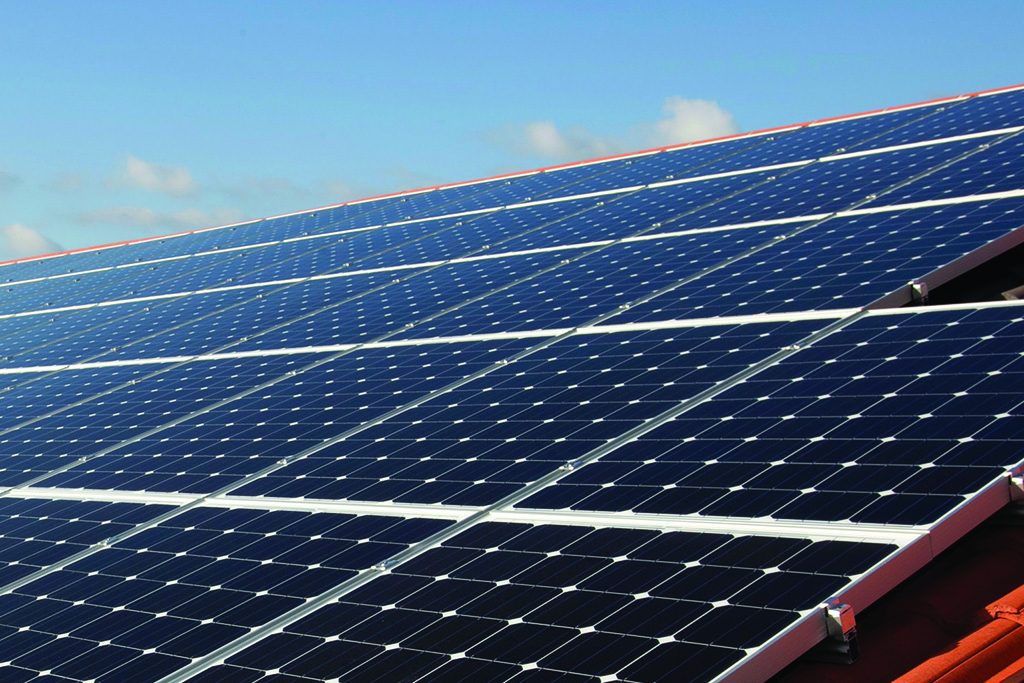
This requires the installation of solar panels equivalent to 40 per cent of each dwelling’s ground-floor area. There will be exemptions for buildings over 18 metres in height, as well as sites where a 720kWh/year output cannot be achieved.
Higher-risk buildings (HRBs) are exempt from the solar panel requirements.
Low-carbon heating will be mandatory, effectively ending traditional gas boiler installations in new homes. Heat pumps are expected to become the default solution for most new dwellings.
In the case of HRBs, the new regulations will apply from September 2027.
The MHCLG said previous regulations requiring consideration of high-efficiency alternative systems and nearly zero-energy requirements will be retained rather than revoked.
“We have decided not to repeal Regulations 25A and 25B at this time,” the department said in its FHS consultation response.
“While consultation responses did not present strong arguments either way, it was considered that retaining these regulations may offer long-term value in certain niche cases.
“Retaining Regulations 25A and 25B provides a backstop, helping to maintain a baseline level of energy efficiency across all developments.”
The Building Safety Regulator will conduct a full technical review of Part O (overheating) to address industry concerns about conflicts with other building regulations and the practicality of current requirements.
The National Federation of Roofing Contractors (NFRC) welcomed the move to make solar panels mandatory in new homes. But the trade association also warned about “significant gaps” in installer-competence standards, cross-trade responsibility boundaries and fire safety testing.
“The more solar we put into the built environment, the more important it becomes to get the basics right,” said Ben Rowlands, NFRC’s head of solar PV, pointing to reports of an increase in the rate of solar-related fires.
“We cannot keep scaling deployment and hope the safety framework catches up. This not only risks homeowner safety, but also the future of the industry.”
Deepika Singhal, head of ESG and sustainability at built environment consultancy Hollis, said the FHS implementation transition period “should not be [used as] an excuse for delay”.
“The FHS is a long-overdue reset for new domestic and non-domestic buildings,” she said. “The direction is right, but the sector can no longer afford to treat emissions from buildings as someone else’s problem if net zero by 2050 is going to mean anything.
“Now the challenge is whether the industry fully understands the requirements and starts implementing the standard. Designers, developers and contractors need to get to grips with the new rules now for this to be effective.”
The FHS has been in the making for more than a decade and was originally intended to come into force in 2025.
It follows a previous commitment by the last Labour government for a Zero Carbon Homes standard, which was due to come into force in 2016 but was scrapped by David Cameron’s Conservative government in 2015.